About the Project
The goal of this NSF-funded project (Grant #2205705) is to understand the social, economic and ecological outcomes of timberland financialization in the state of Maine. The primary objectives are as following:
- Analyze the socio-environmental implications arising from the industrial timberland financialization process in terms of landscape pattern changes, harvest patterns, carbon storage, and access to forest benefits by tribal and non-tribal forest users;
- Identify the actors, processes, and variables that act as leverage points in driving changes in patterns of carbon storage, forest conservation, and community benefits within timberlands as socio-environmental systems;
- Develop and simulate future governance and management scenarios for these lands that evaluate their carbon, ecological, and social implications and tradeoffs through a collaborative co-production process with key stakeholders.
Forestland Ownership Change in Maine, 1995 – 2024

Map by Dr. Xiaojie Gao ©
Our Team








Ongoing Work
Semi-structured Interviews Students, Erin Dorr and Ravneet Kaur, have collectively conducted 60 interviews with various forest stewards, landowners and land managers.
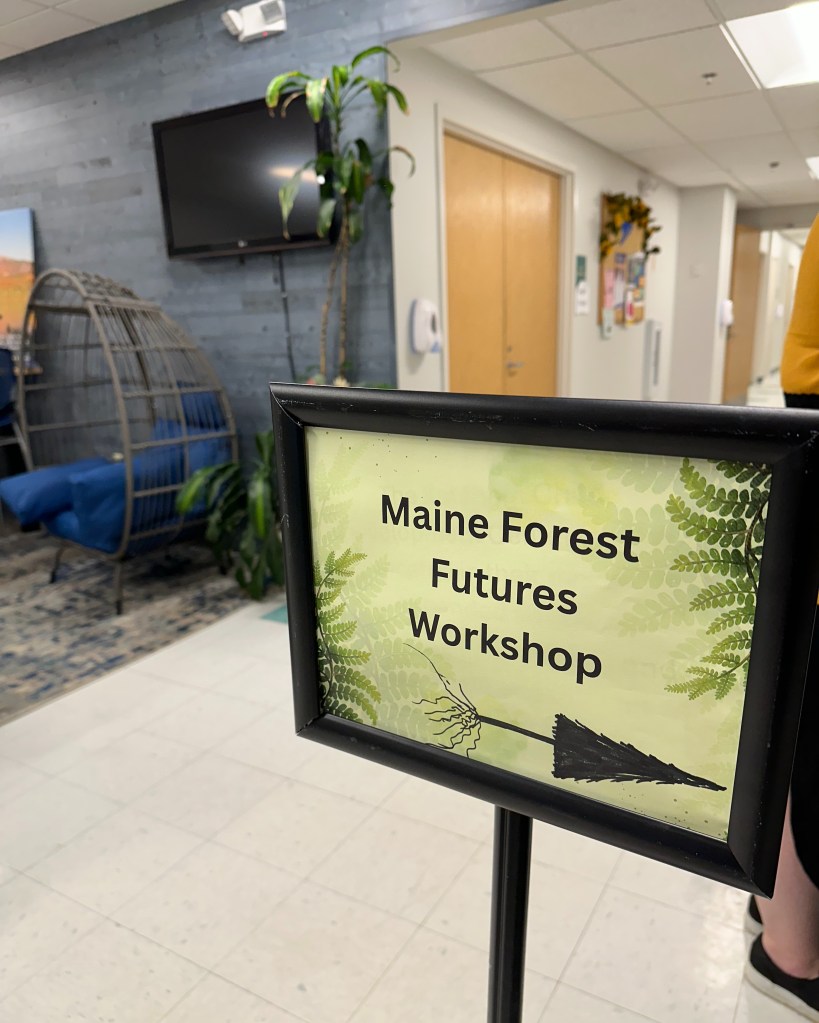
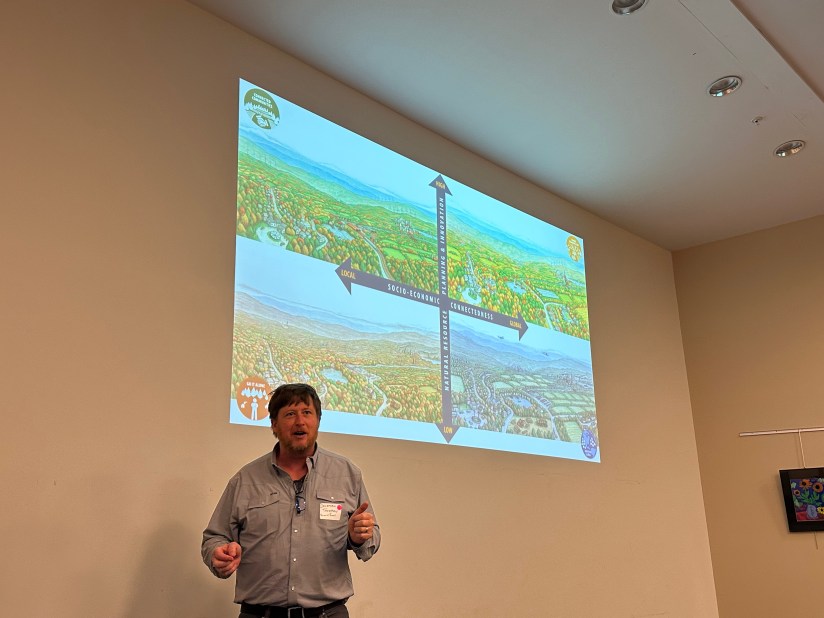
Participatory Workshops – Our team organized and facilitated multiple in-person regional and statewide workshops, where community members, local leaders, land trusts, policy makers, regional organizations, and others were invited to discuss their hopes and concerns for the future of Maine forestlands and explore possible future community and forest trajectories.
- Western Woods – Carrabassett Valley area; 12 participants
- Katahdin Region – Millinocket and Katahdin area; 12 participants
- Statewide – focused on forestlands in Maine; 20 participants
- Wabanaki Workshop – focused on Wabanaki forest management priorities; 8 participants
- Downeast Region – focused on Hancock and Washington counties; 17 participants

Pages: 1 2
 Contact Us: